


NATIONAL MUSEUM OF ANTHROPOLOGY

The National Museum of Anthropology (MNA) is one of the most important museums in Mexico and the Americas. It is designed to house and exhibit the archaeological legacy of the peoples of Mesoamerica , as well as to reflect the country's current ethnic diversity. There is a lot of history to take in when visiting this museum; my hope is that this brief summary of the contents and the rooms will help to orient you when you plan a visit.
Among the most emblematic pieces in the collection are the Sun Stone —seen in the very heart of the museum.

The colossal heads of the Olmec culture

The monumental Teotihuacan sculptures dedicated to the water gods, the tomb of Pakal and the funerary offerings from Monte Albán

The stelae of Xochicalco
The Toltec Atlantean figure brought from Tollan-Xicocotitlan and the Tláloc Monolith that guards the museum's entrance.

The National Museum of Archaeology, History, and Ethnography and was opened on September 9, 1910, after several different iterations preceded it going back to 1790.
The National Museum of Anthropology (MNA) has 24 exhibition rooms, of which 23 are permanent and one is intended for temporary exhibitions, which are sometimes museum displays from various museums around the world.
The permanent galleries are distributed across the building's two floors. The ground floor houses the galleries dedicated to anthropology and the pre-Hispanic cultures of Mexican territory, from the Peopling of the Americas to the Mesoamerican Postclassic Period . The second floor contains the 11 ethnography galleries , which exhibit samples of the material culture of the indigenous peoples living in Mexico today.
The archaeology galleries are arranged around the open-air portion of the central courtyard, where the pond is located, and are ordered chronologically, beginning on the right and continuing to the Mexica gallery. From the Oaxaca cultures gallery onward, the order of presentation is geographical.
Room 1: Introduction to Anthropology

Room 2: Settlement of America
Room 3: Preclassic in the central highlands
Houses objects crafted between the 13th century BCE and the 1st century AD, according to the Mesoamerican chronology primarily used in Mexico.
Room 4: Teotihuacan
Teotihuacan is one of the largest and most important archaeological sites in Pre-Columbian America. It was built over more than 651 years, from the late Preclassic period (100-200 BCE) to the late Early Classic or the beginning of the Epiclassic period (650 AD), characteristic of the Central Highlands. The Pyramids of the Sun and Moon, the Pyramid of the Feathered Serpent—also known as the Temple of Quetzalcoatl —and the Avenue of the Dead constitute the main group of ceremonial buildings that served as landmarks for orienting, planning, and constructing the city.

The approximate number of people who lived in the city during its period of greatest splendor (400-600 AD) is over 100,000 inhabitants, and the size of the city (urban area) was close to 25 square kilometers. The members of the Teotihuacan government developed a political system that allowed them to maintain a stratified society, divided into different sectors that participated with their labor in productive activities. Among them were the priests, possessors of knowledge and responsible for transmitting it to society according to established norms and parameters. The base of the social pyramid consisted of artisans, builders in general, experts in obtaining and transporting materials and raw materials, farmers (or peasants), a fundamental sector for maintaining the political system, and merchants, responsible for the short- and long-distance transport (import and export) of goods for exchange.
In the room, the visitor will be able to appreciate various examples of the Teotihuacan culture: the theater-type incense burners, reproductions of the murals found in the residential complexes, the reproduction of part of the facade of the Temple of the Feathered Serpents, the Thin Orange ceramic and various stone objects.
Room 5: The Toltecs and the Epiclassic
Following the fall of Teotihuacan, a power vacuum emerged in the Central Highlands, which was exploited by various groups who founded new cities. Most of the new cities were characterized by a multiethnic population, a result of the population movements typical of the Epiclassic period (600-900 AD).

Room 6: Mexicas
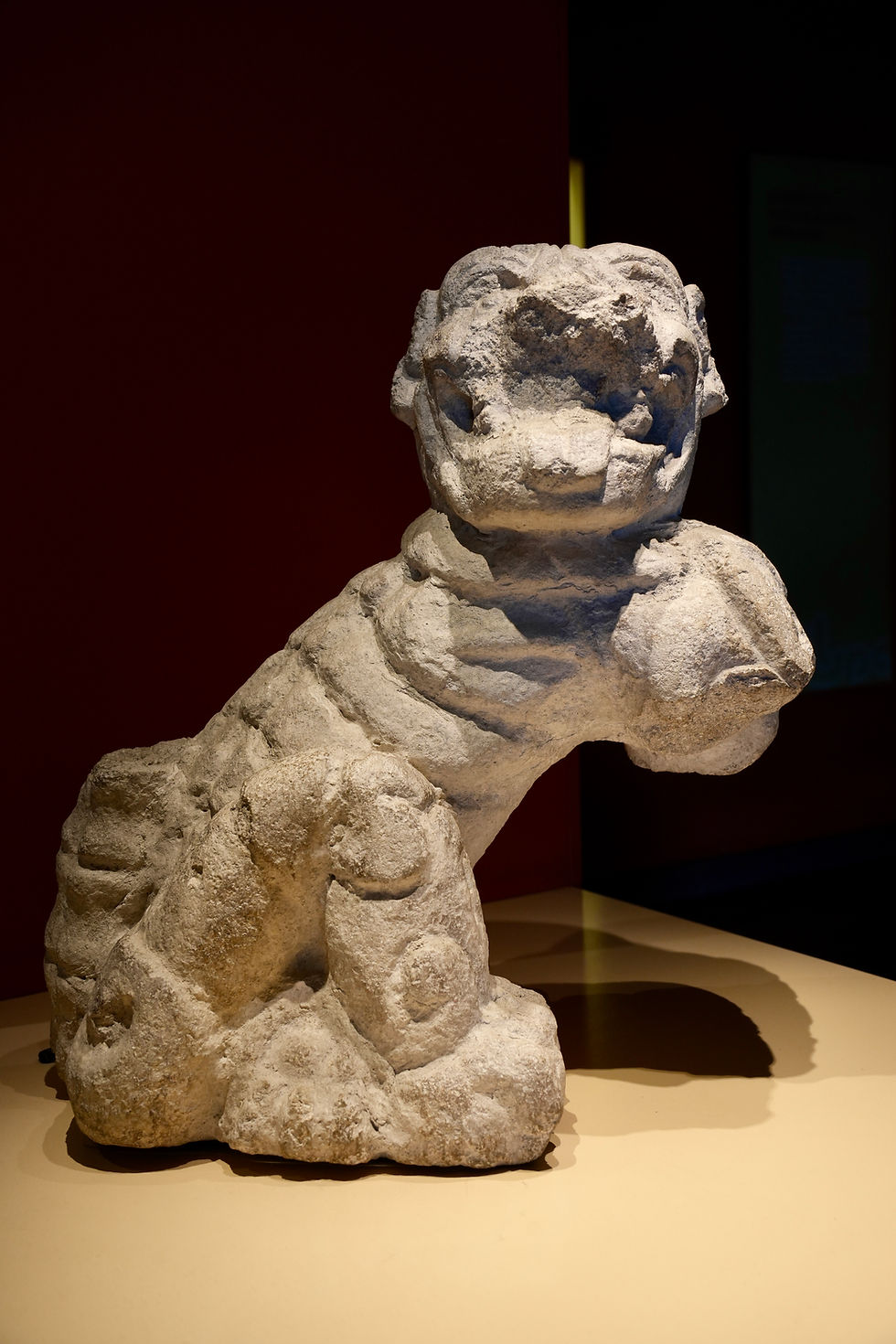
The exhibit showcases the power and importance of the Mexica culture during the Late Postclassic period (1250-1521 CE). In the hall, visitors can admire magnificent, large-format sculptures such as the Sun Stone; a feline-shaped Cuauhxicalli; and the Stone of Tízoc. There are also smaller but exceptionally crafted lapidary pieces.

Room 7: Cultures of Oaxaca
The Zapotec and Mixtec peoples were ethnic groups that inhabited and still inhabit what is now the state of Oaxaca, and at different times they governed the destinies of this complex multicultural area. One important element of Zapotec culture is the early development of writing.
Room 8: Cultures of the Gulf Coast of Mexico
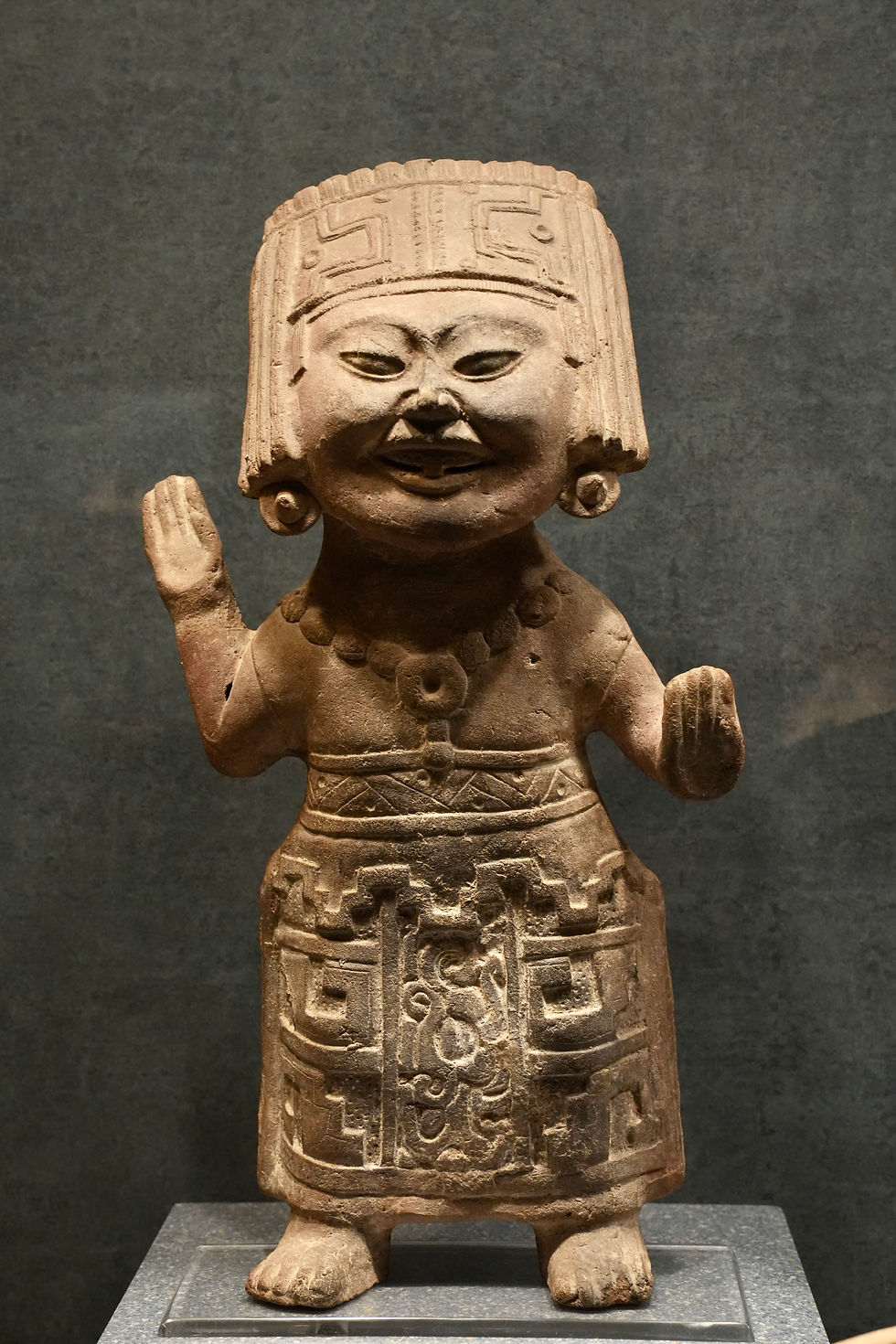
During the Middle Preclassic period, the Olmec culture flourished on the Gulf Coast. Distinctive of this culture are its sculptural works, characterized by being carved from sandstone slabs, generally depicting deities, with a hieratic and rigid character because the stonemasons had to adhere to the dimensions of the slab.


Room 9: Maya
One of the diverse cultures of ancient Mesoamerica was the Maya. Located in a vast territory encompassing the present-day Mexican states of Chiapas, Tabasco, Campeche, Yucatán, and Quintana Roo, as well as parts of Guatemala, Belize, Honduras, and El Salvador, these groups developed a complex writing system, a precise calendar, and created some of the most exquisite artistic expressions of our pre-Hispanic past.
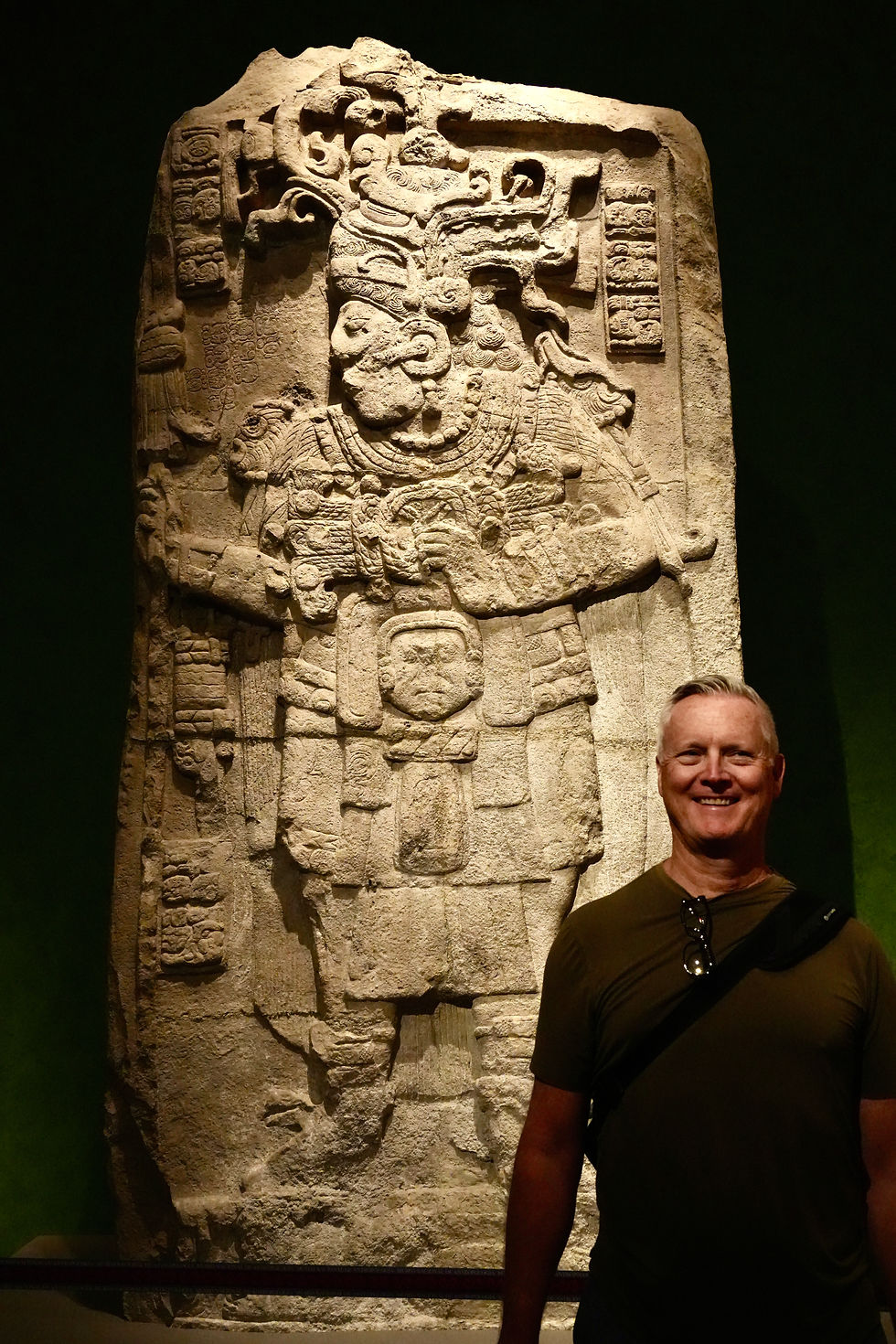
A significant portion of the artistic expressions found on sculpted monuments served as political propaganda. On stelae, lintels, vessels, and other forms, rulers were portrayed practicing rituals, performing dances, or as warriors subduing captives and displaying their royal power through elaborate attire that included feathered headdresses, ceremonial staffs, scepters in the form of gods, and jewelry.

Room 10: Cultures of the West
Shaft tombs were burial chambers excavated in tepetate (a type of volcanic tuff) with one or more chambers accessed through a cylindrical shaft that could range from 2 to 16 meters deep and up to two meters in diameter. Rich offerings of clay objects were deposited within them. The quality of the ceramic pieces has led to the shaft tombs becoming a target of systematic looting. Ceramics and metal objects, especially copper, are the most important. Also noteworthy are the sculptures of a Chac Mool and a throne.

Room 11: North
This area covers approximately two-thirds of the national territory. Among the collections is one from what is now the southwestern United States, which until 1847 was the far northwest of Mexico. Chronologically, the hall spans from around 2000 BCE to the time of the Conquest.
Room 12: Indigenous Peoples
This room showcases the current indigenous peoples of Mexico, covering aspects such as their worldview, religion, economy, ceremonies, dances, rituals, as well as ancestor worship, social organization, and daily life.
It depicts the daily lives of indigenous inhabitants from diverse cultures in our country, through the vision and tools of
activities such as farmers, chinampa farmers, gatherers, hunters, builders, artisans, among others.

Room 13: Great Nayar
The cultures presented here are distinguished by their artistic expression of their worldview in objects such as yarn paintings and power objects.
Room 14: Puréecherio
The word "puréecherio" encompasses the land, family, ancestors, villages, community, tradition, and "custom," the latter being everything that is characteristic of the Purépecha people. This room exhibits the Purépecha, an ethnic group that continues to practice ancestral activities such as fishing, hunting, agriculture, and daily life, among others.
Room 15: Otopame
Among the exhibited items are pieces made of ceramics, palm, and amate paper, as well as codices, masks, paintings, textiles, and other objects of great cultural value.
Rooms 16-22 continue to display more objects from those distinct regions.


Comments