


DISCOVER
TURKEY
Layers of legacy, spice, and history of civilizations past come together it its current modern society.
Istanbul is a very large modern city with a rich past and important place at the crossroads between Europe and Asia. The mosques, the bazaars, the Bosphorus are what made the biggest impression on me during our visit there.
EXPLORE RELATED
BLOG posts

Food & Drink
ISTANBUL: GRAND BAZAAR
The Grand Bazaar and Spice Market have been commercial hubs since Ottoman times. Walking through them envelops you with exotic scents of the spices to the sights which ranged from handcrafted copper to jewels to Turkish textiles. We had a cup of tea at a cafe on the roof above the bazaar where we could look down on the undulating rooftops that Tom Cruise hopped and skipped across on his motocycle in Mission Impossible: Dead Reckoning Part One. People actually pay to take a tour across the...
Architecture
ISTANBUL: SULEYMANIYE MOSQUE
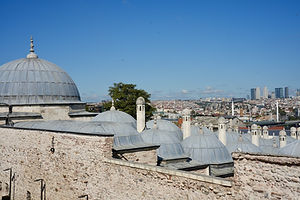
The Süleymaniye Mosque is a magnificent hilltop structure built in the 16th century at the behest of, and named after, Sultan Süleyman the Magnificent in Istanbul , Turkey . It was designed by Sinan , one of the foremost architects of his era and the chief architect to Süleyman for nearly 28 years. Sinan's portfolio is extensive—79 mosques, 34 palaces, 33 public baths, 19 tombs, 55 schools, 16 poorhouses, 7 madrasahs (religious schools), and 12 caravansaries, along with granaries,...

Architecture
ISTANBUL: THE BLUE MOSQUE
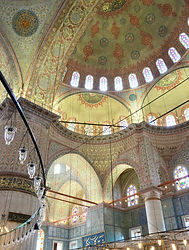
The Blue Mosque was built between 1609-1617. It is a blend of Byzantium and Ottoman-style architecture influenced by the Hagia Sophia with a central dome, surrounded by four semi-domes and flanked by six minarets. It is adorned with over 21,000 blue tiles, hence the Blue Mosque. Considered one of the most sacred places on earth, it still functions as a mosque today. It is big with a capacity of 10,000.

Istanbul
NAIROBI TO ISTANBUL...not simple
I will chat briefly about leaving Africa and heading to Istanbul. Nothing is simple with going to and leaving Africa. We had to take a puddle jumper safari plane from Nanyuki to Wilson Airport in Nairobi. Wilson Airport is where we also flew out of when we went to the Ndato Offbeat Safari Camp and is where most of the smaller flights go in and out of. The airport is a series of hangers and buildings that ramble for blocks and if you could image a facility that houses homeless airplanes, this...

Culture & History
ISTANBUL: INTRO
Istanbul, home to 16 million residents (compared to NYC's 8.4 million), is the most populous city in Europe, bridging the Bosporus Strait between Europe and Asia. Established as Byzantium in the 7th century BCE, it became the imperial capital under Roman Emperor Constantine the Great, initially named New Rome and later, in 330 AD, Constantinople. In 1930, the city was renamed Istanbul. Regardless of its name, the city boasts a rich history as an imperial capital, particularly during the...

Architecture
ISTANBUL: BASILICA CISTERN
For a completely different experience, venture down to the Basilica Cistern. Constructed in the 6th century using surplus columns from the Hagia Sophia and other locations, it served as an underground reservoir to supply water to the Topkapi Palace. The diverse columns (spare parts from other building sites) are highlighted by a display of colored lights, and a few inches of water still cover the floor, creating a perfect backdrop for capturing photos with reflections of the columns. Clearly,...
Culture & History
ISTANBUL: HAGIA SOPHIA
Hagia Sophia (532-537) was initially built as a church and remained the largest cathedral for almost 1000 years until the Seville Cathedral was completed in 1507. Following the fall of the Byzantine Empire in 1453, when the Ottomans captured Constantinople, Hagia Sophia was converted into a mosque. This transformation involved removing bells and altars and concealing images of Jesus, Mary, and the saints and angels. Large wooden black discs with Arabic calligraphy were placed in the rotunda...

Architecture
ISTANBUL: KARIYEE MOSQUE
The final significant site we toured was the Kariyee Mosque, originally constructed as a church in the 6th century. Following the conquest of Istanbul, it was converted into a mosque in 1511. The site is renowned for its frescoes and mosaics, which were created between 1310 and 1317. These Byzantine frescoes are remarkable and naturally religious, depicting scenes from the Old Testament, New Testament, and the Gospels.

Art
ISTANBUL: THE TOKAPI PALACE
The Topkapi Palace , home to many sultans and their very many wives, concubines and eunuchs. Construction began in 1459 and was completed in 1856. Highlights included seeing the imperial treasure, library and harem. The palace became a museum in 1924. Aside from experiencing pleasure from their many wives and concubines, the Sultans collected many beautiful jewels including an 86 carat diamond known as the Spoonmaker’s Diamond and the Topkapi Dagger decorated with 3 large emeralds. There...

Luxury Travel
ISTANBUL: SIX SENSES HOTEL
When I booked the hotel, I had a few parameters including a place that was small, stylish and had twin beds for myself and Lauren. I was challenged in trying to find a decent hotel that had twin beds which surprised me, but it is also not a parameter that I am usually looking for when looking for a place to stay. ln retrospect, Next time, I probably will stay at the Four Seasons in the center of the City because the Six Senses is located 90 minutes by ferry from the center of town. But,...

LETS Connect