


EGYPT
ASWAN
Aswan is a city in southern Egypt on the Nile River, known for its distinct Nubian culture, ancient sites, and sunny, dry climate. It is a major gateway to southern Egypt.
Aswan is a picturesque city located in southern Egypt, along the banks of the Nile River. Known for its scenic landscapes and tranquil atmosphere, Aswan has long served as an important gateway to Africa and a crossroads of ancient civilizations. The city is renowned for its impressive granite quarries, which supplied stone for many of Egypt’s iconic monuments, including the obelisks and temples. Aswan’s waterfront is dotted with feluccas—traditional sailboats—that glide past green islands and desert cliffs, offering stunning views, especially at sunset.
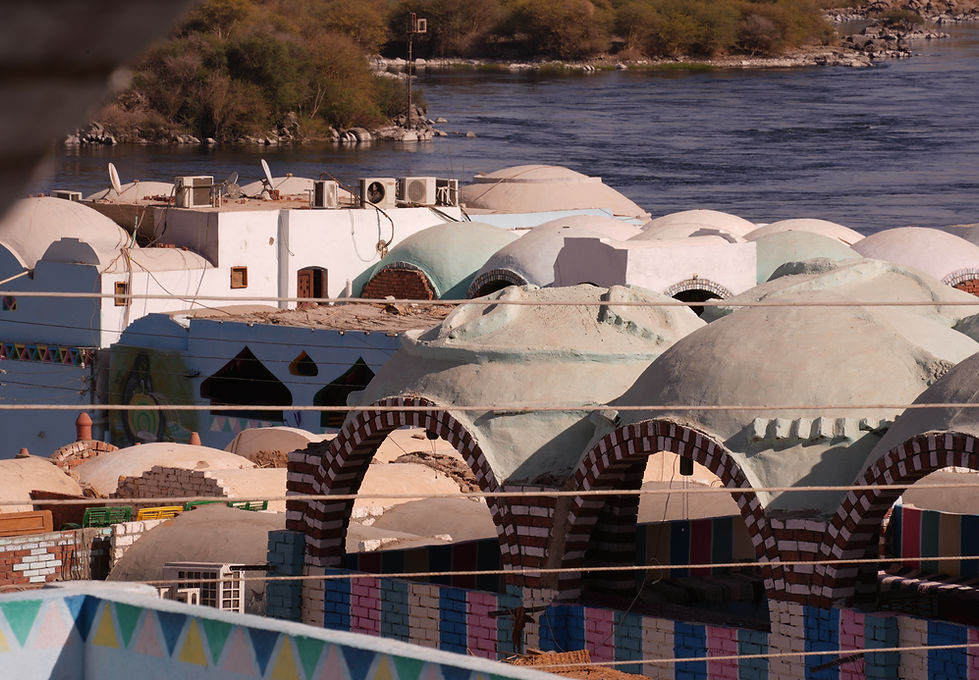
Among its most notable attractions are the majestic Philae Temple, dedicated to the goddess Isis, and the High Dam, which was a monumental engineering feat in the 20th century and created Lake Nasser. The nearby Nubian villages provide a glimpse into the rich cultural heritage of the region, with their colorful homes and warm hospitality. Aswan also serves as the starting point for visiting the legendary Abu Simbel temples, carved into the mountainside by Ramses II. With its blend of ancient history, natural beauty, and vibrant local culture, Aswan offers a unique and memorable experience for travelers.
BACK TO
GALLERY


LEARN MORE BY EXPLORING MY BLOG:
CHECKING IN WITH CHUCK

ASWAN
Aswan was our final destination on our Nile River cruise; it borders Sudan and its civil war was just beginning when we got there. It contains significant archaeological sites like the Philae temple complex, on Agilkia Island near the landmark Aswan Dam. Philae’s ruins include the columned Temple of Isis, dating to the 4th century B.C. Downriver, Elephantine Island holds the Temple of Khnum, from the Third Dynasty. Our takeaway from our brief visit to Aswan is that it is a colorful city, with...

ASWAN: NILE RIVER CRUISE>EDFU: GEBEL AL-SILSILA
Gebel al-Silsila is a mountainous region with sandstone quarries on both sides of the Nile. The sandstone quarries of Gebel al-Silsila have been used from the Middle Kingdom (c. 2034–1650 BC) until the 20 th century. More than a hundred quarries were exploited to extract the sandstone blocks needed to construct many of ancient Egypt’s famous temples. The quarries have preserved tool marks and workers’ inscriptions that can be seen today. The close up picture below is the quarry wall covered...
CURIOUS ABOUT another destination or location?

Let’s
Connect